What Is a Prepared Environment? The Montessori Secret That Helps Children Thrive
If you've been researching Montessori preschool, you've probably come across the phrase "prepared environment." It sounds important, but what does it actually mean? More importantly, why do Montessori educators consider it one of the most powerful tools for helping children become confident, independent, and joyful learners?
At Global Village Montessori, with campuses serving families in Pleasanton, Tracy, and Milpitas, the prepared environment is at the heart of everything we do. It's much more than an organized classroom. It's a thoughtfully designed space that supports every stage of your child's development.
Whether you're searching for the best Montessori preschool, comparing early childhood education programs, or wondering if a Montessori school is right for your family, understanding the prepared environment can help you see what makes Montessori unique.
What Is a Prepared Environment?
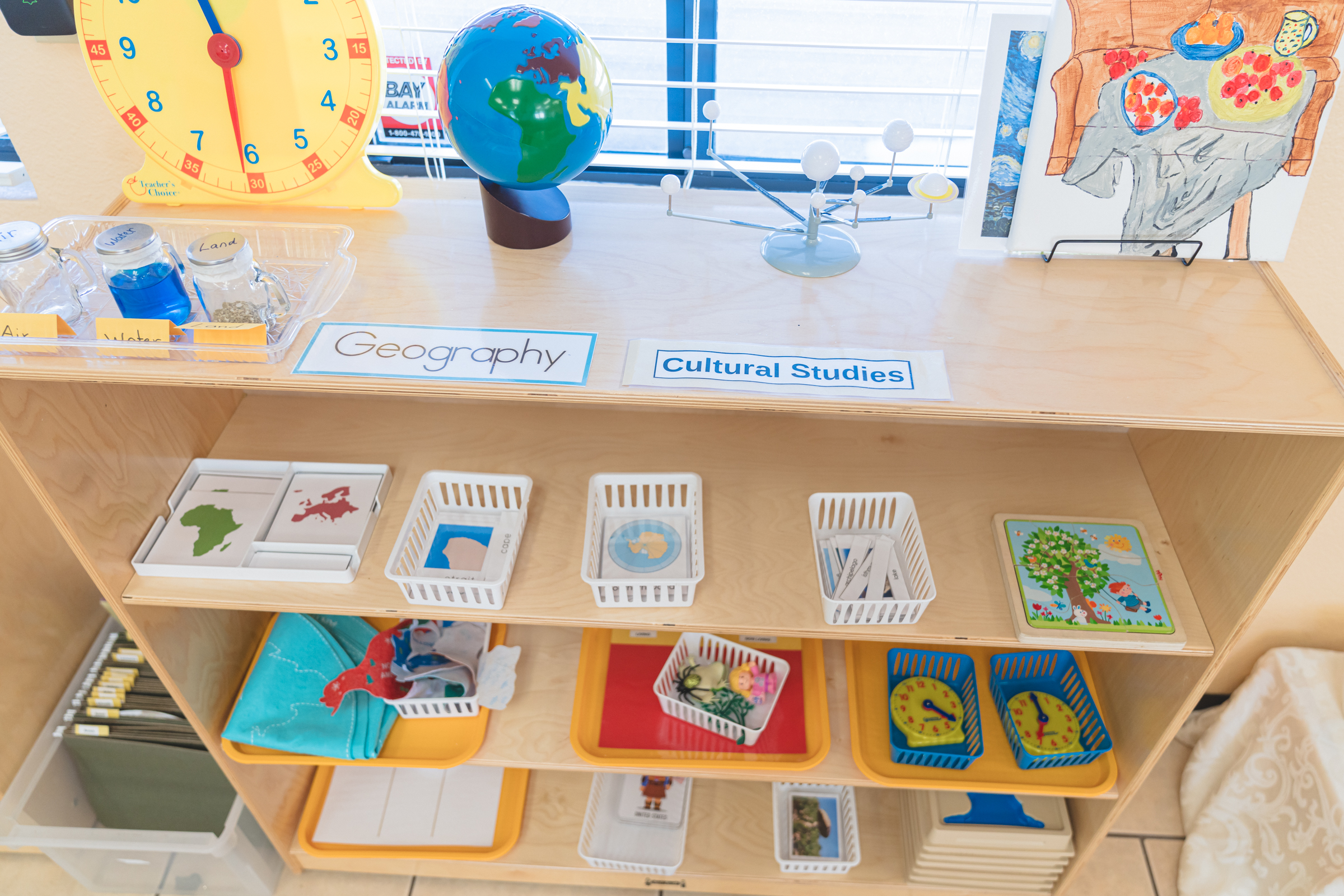
A prepared environment is a carefully designed classroom where every material, shelf, table, and activity has a purpose. Rather than filling the room with bright distractions or endless toys, Montessori classrooms are intentionally organized to encourage children to explore, discover, and learn independently.
Dr. Maria Montessori believed that children naturally want to learn. Instead of adults directing every moment of the day, the classroom itself becomes a teacher.
In a Montessori preschool classroom, you'll notice:
- Child-sized furniture that encourages independence
- Beautiful, hands-on learning materials displayed on open shelves
- Organized learning areas for practical life, language, math, science, and cultural studies
- Calm, peaceful spaces that encourage concentration
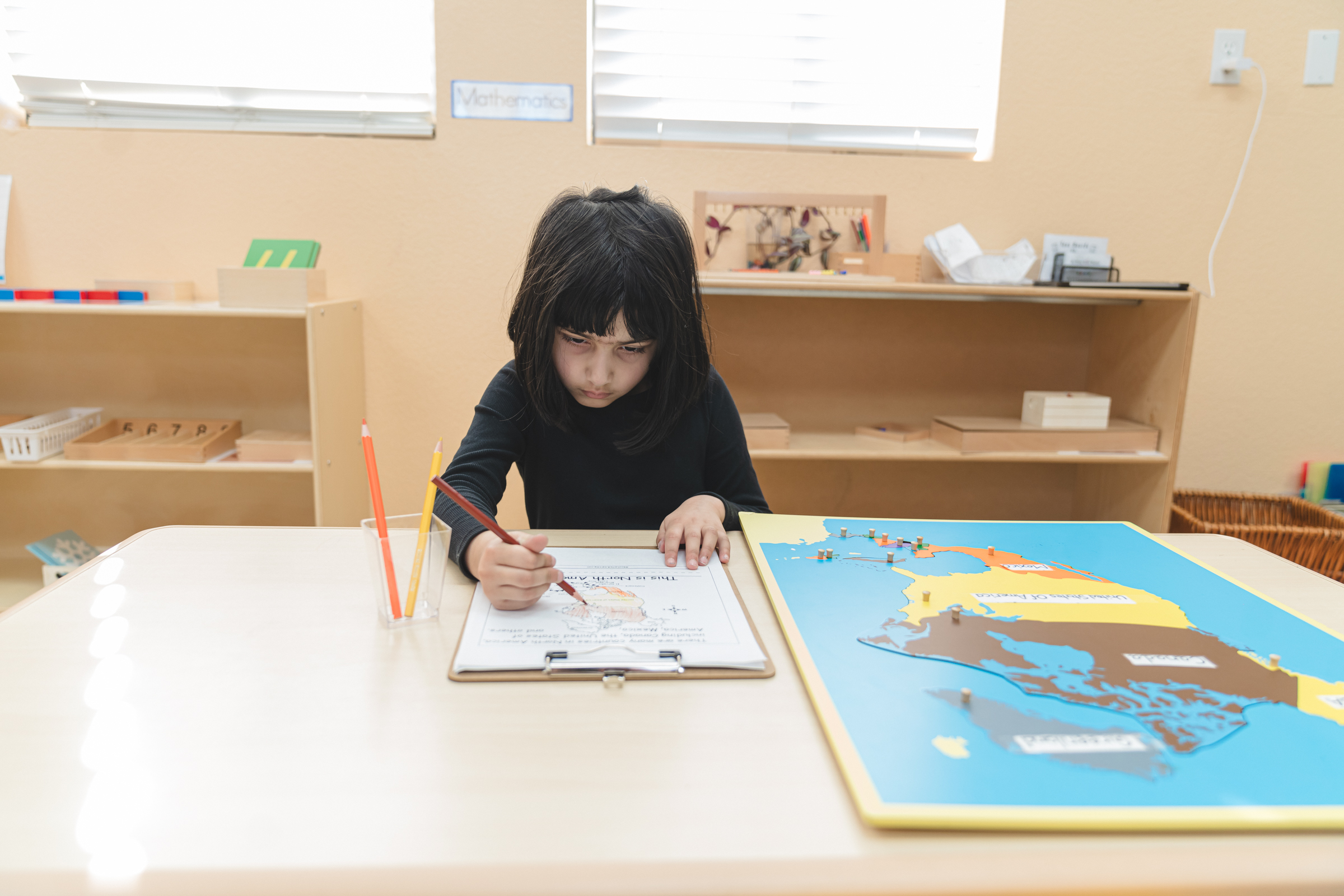
- Freedom for children to choose meaningful work within clear expectations
Everything has a place, and every material has a purpose.
Why Does the Prepared Environment Matter?
Young children learn best when they can actively participate in their own education.
In many traditional preschool classrooms, teachers lead the majority of activities while children move together as a group.
In contrast, a Montessori classroom allows children to make meaningful choices throughout the day. They select activities that match their developmental readiness while teachers observe, guide, and introduce new lessons when appropriate.
This approach helps children develop:
- Independence
- Self-confidence
- Responsibility
- Problem-solving skills
- Concentration
- Self-discipline
- A lifelong love of learning
These aren't just preschool skills—they're life skills.
Learning Through Independence
One of the first things parents notice in a Montessori preschool is how capable the children are.
Even our youngest students learn how to:
- Put away their own work
- Clean up spills
- Prepare simple snacks
- Water classroom plants
- Care for classroom materials
- Help classmates respectfully
These everyday activities are part of the Practical Life curriculum, one of the foundational areas of Montessori education.
While these tasks may seem simple, they build confidence, coordination, focus, and executive functioning—skills that support future academic success.
When children hear, "You can do it yourself," they begin believing it.
Why Are Montessori Materials So Different?
Parents often ask why Montessori classrooms don't have rows of desks, worksheets, or bins overflowing with plastic toys.
The answer is intentional design.
Every Montessori material isolates a single concept, allowing children to master one skill before moving to the next.
For example:
- Pink Tower introduces size discrimination.
- Brown Stair develops visual perception.
- Sandpaper Letters connect movement with early literacy.
- Number Rods build mathematical understanding through hands-on exploration.
Instead of memorizing information, children experience learning with their hands before moving to abstract thinking.
Research consistently shows that young children retain concepts more effectively through active, hands-on experiences than passive instruction.
Freedom Within Limits
Another Montessori phrase parents hear is "freedom within limits."
Does that mean children can do whatever they want?
Not at all.
Children are free to choose meaningful work, but they also learn responsibility.
For example, they learn to:
- Return materials to the shelf.
- Respect classmates' work.
- Care for the classroom.
- Use indoor voices.
- Complete activities before selecting something new.
These consistent expectations create a peaceful learning community where children feel secure while developing self-control.
Mixed-Age Classrooms Encourage Leadership
A hallmark of Montessori education is the mixed-age classroom. Children typically remain with the same teacher for three years.
This creates a community where:
- Younger children learn by observing older classmates.
- Older children reinforce their own knowledge by helping younger students.
- Friendships develop naturally across age groups.
- Teachers build deep relationships with each child over time.
Rather than competing against peers, children grow at their own pace.
What Parents Often Notice First
Families touring a Montessori preschool are often surprised by how calm the classrooms feel. Children aren't sitting quietly because they're being told to. They're engaged because they're interested.
You'll often see children:
- Working independently
- Collaborating respectfully
- Concentrating for long periods
- Caring for their environment
- Solving problems without adult intervention
This deep concentration is one of the defining characteristics of authentic Montessori education.
Is the Montessori Prepared Environment Right for Every Child?
Parents sometimes wonder whether Montessori is only for naturally independent children. In reality, the prepared environment helps children develop independence over time. Whether a child is outgoing, cautious, energetic, or reserved, the classroom provides opportunities to build confidence at an individual pace.
The goal isn't to create perfect students. It's to nurture curious, capable, compassionate human beings.
Experience the Montessori Difference at Global Village Montessori
At Global Village Montessori, we believe every child deserves an environment that respects their curiosity, independence, and unique potential.
Our Montessori classrooms are thoughtfully prepared to support children during the most important years of early childhood development.
If you're exploring Montessori preschool options, comparing preschools near you, or searching for a nurturing early childhood education program, we'd love to show you what makes Montessori so special.
The best way to understand a prepared environment isn't by reading about it—it's by seeing children confidently learning, exploring, and thriving within it.
Schedule a tour at Global Village Montessori today and experience the Montessori difference for yourself.